Why Harry Styles Coming Back Feels Like a Collective Exhale
Written by Emily Vasseur, LCPC
For therapists and clients alike, the past year has felt heavy. Between political shifts, ongoing uncertainty, and increasing stress around insurance and access to care, many people have named the same feeling in session: things feel dark. As therapists, we’re trained to hold space and offer steadiness and perspective. Yet in supervision, I’ve heard colleagues say, “People look to us for answers, and honestly, I don’t have them either.” It has been an emotional year to witness and to live inside. And then, on January 15, something unexpected happened. When Harry Styles announced a new album coming March 6, a collective exhale seemed to ripple across social media. Suddenly, posts appeared joking that “Harry Styles is coming to save the world,” or that his return felt like light breaking through a long winter. It wasn’t really about a pop album. It was about relief, familiarity, and the comfort of something good to look forward to.
Music is one of the things that still brings us together. For some, it is an escape. For others, it is a form of expression. At times, it becomes a coping strategy. Music is a universal art, one that connects people in a world where connection can feel increasingly scarce. Not everyone listens to Harry Styles, and that is okay. We all have different tastes, and that diversity is part of what makes music meaningful. We do not need to judge what others enjoy in order to feel connected. We can respect that we like different things while still sharing the same human experience of finding comfort, meaning, and regulation through sound. During difficult times, many of us turn to music because it offers something familiar, grounding, and emotionally accessible when words fall short.
From a neuroscience perspective, music has a direct impact on how our nervous system functions. Rhythm, melody, and familiarity can help regulate heart rate, breathing, and emotional arousal. When we listen to music that feels safe or familiar, the brain often interprets it as a cue that danger has passed, allowing the nervous system to settle. For many people, music activates reward pathways in the brain and supports emotional processing in ways that feel accessible and non-threatening. This is part of why certain songs can feel calming, energizing, or even stabilizing during moments of stress. Music does not remove the stressors we are facing, but it can help our bodies feel more regulated while we navigate them.
There is also something powerful about experiencing music collectively. When an artist releases new music or announces a return, it creates a shared moment that people experience together, even if they are physically apart. In a time when many feel isolated, these moments can remind us that we are not alone in our reactions, emotions, or hopes. Shared excitement, anticipation, and joy help soften the sense of disconnection that has become so common. This collective response is not about idolizing a single artist. It is about the human need for shared experiences and the comfort that comes from feeling part of something larger than ourselves.
In therapy, we often talk about regulation as a foundation for healing. When the nervous system feels overwhelmed, it becomes harder to think clearly, reflect, or access hope. Moments of joy, familiarity, and connection are not distractions from the work. They are part of what makes the work possible. Music can act as a bridge in this way. It gives the body a chance to settle, even briefly, which allows space for emotions to be processed rather than avoided. In difficult seasons, allowing ourselves to experience joy through music is not indulgent or dismissive of pain. It is a way of supporting the nervous system so we can continue showing up, both in therapy and in our everyday lives.
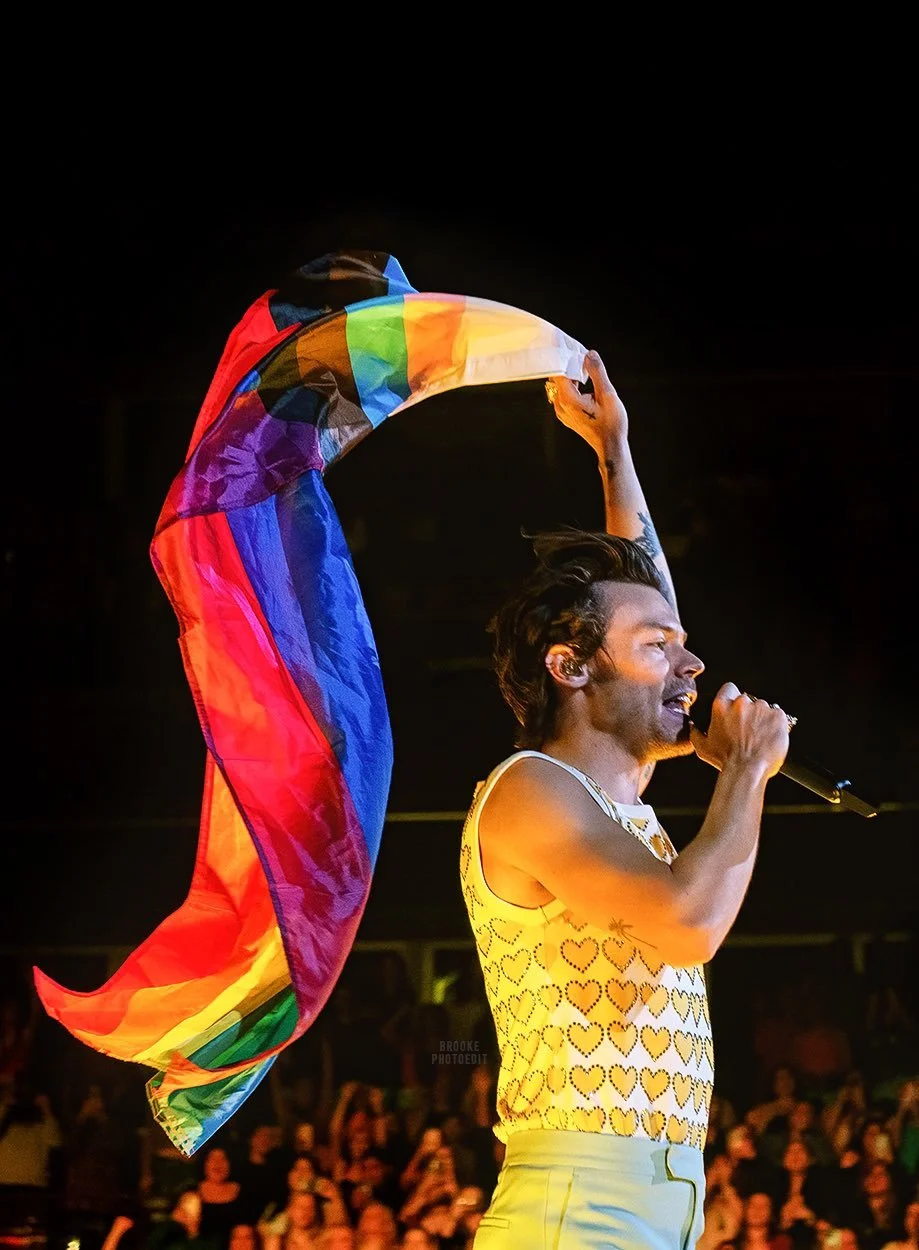
Personally, one of my favorite ways of feeling connected to Harry Styles is through the culture he creates around “Treat People With Kindness.” The song has become a space where many people share personal stories, including coming out and processing grief, and connect with him in meaningful ways. I went to a concert in Los Angeles and was lucky enough to experience the love and support he exudes firsthand. During “Treat People With Kindness,” he is often seen dancing around the stage carrying pride flags, bringing humor, warmth, and genuine care to the performance, creating a sense of safety that is rare to find in these moments. Styles frequently acknowledges his fans’ energy and support and expresses how grateful he is for the environment they help make together, suggesting that the kindness at his shows is a shared experience born from both him and the community around him.
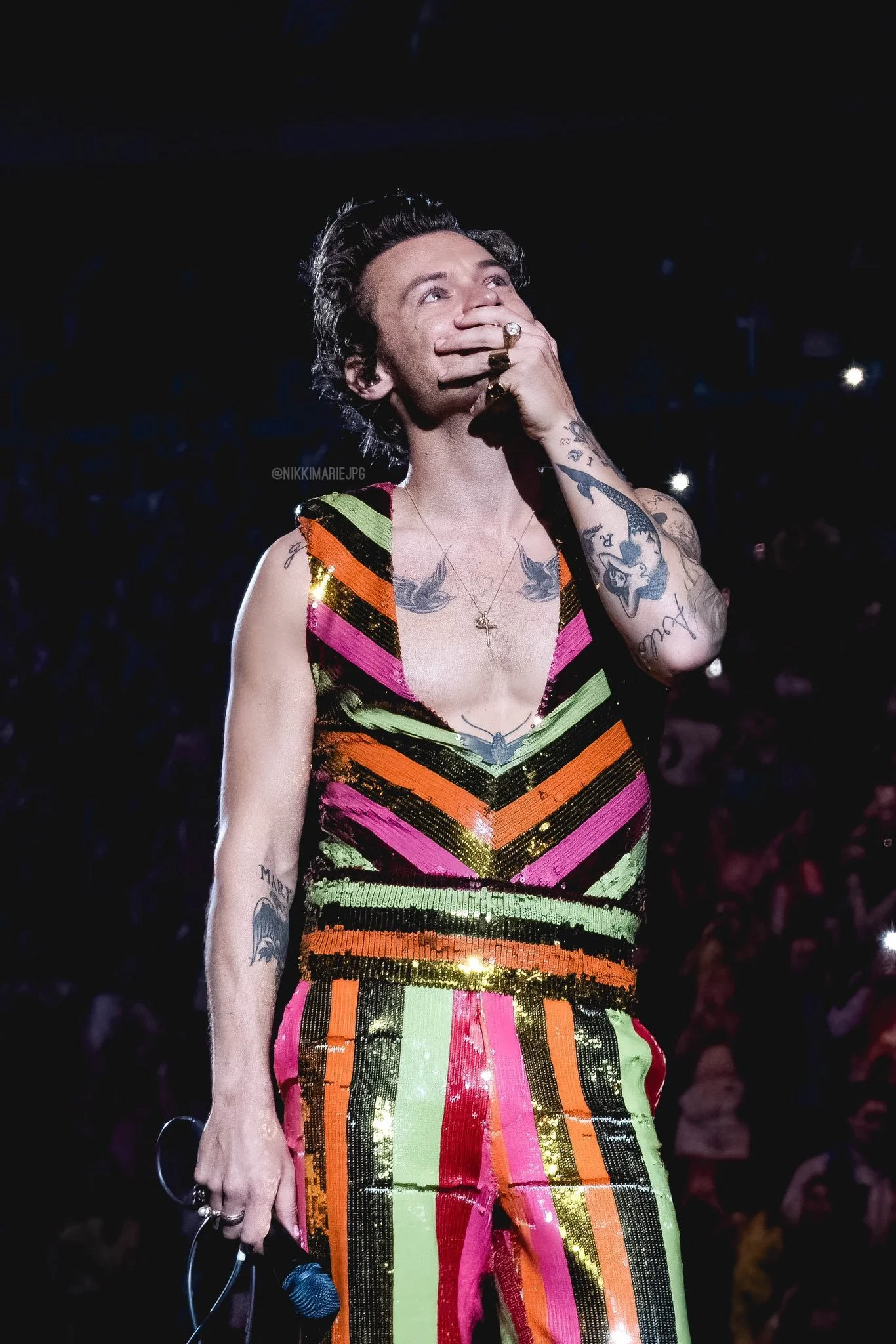
Harry once said, “Fill up your own cup, and let them fall in love with the overflow.” He said it so simply while teaching a fan how important it was to focus on self‑care and personal well‑being. After a tour of two years, he took a three‑year hiatus following nonstop touring and creative output, one of the most demanding schedules any artist has undertaken in recent memory. It makes sense that during this time away from the spotlight he would take his own advice, tending to his own needs and allowing space to rest, reflect, and create again. Though some may think Harry and other artists are just creating music, they are often expressing and teaching valuable lessons about resilience, healing, and self‑connection. Their art becomes more than entertainment. It becomes part of how many of us understand our own emotional landscapes.
One of the most powerful parts of Harry Styles’ impact isn’t just the music itself, but the way people respond to it. Fans often share how his songs, performances, or messages have helped them process difficult emotions, feel less alone, or find a moment of joy in challenging times. Here are just a few examples of what people have said about how Harry has touched their mental health:
“Harry’s music showed up for me when I didn’t know how to show up for myself.”
“Listening to his songs makes the world feel a little less heavy.”
“His music helped me feel understood when I didn’t have the words.”
“There were days his songs were the only thing that brought me comfort.”
“I didn’t realize how much I needed joy until I felt it again at his concert.”
Music is more than entertainment. It is a bridge to connection, a tool for processing emotions, and a reminder that joy and safety can exist even during difficult times. Harry Styles’ return and the culture he fosters show us how collective care, kindness, and creativity can touch our mental health in real ways. Whether it’s finding comfort in a favorite song, witnessing the support of a fan community, or simply allowing yourself to enjoy something that brings light, these experiences matter. They remind us that taking care of ourselves, showing kindness, and engaging with what brings us joy are not frivolous — they are essential. So the next time a song moves you, a performance lifts you, or a message resonates, notice it. Let yourself feel it. That is part of how we heal, connect, and move forward.